Sustainable Cooking at Giselle Bali: A More Conscious Mediterranean Approach in Canggu
Sustainability has become one of the most overused words in hospitality, and that is precisely why it needs to be handled with care. In Bali, where restaurants are asked to balance guest expectations, imported influences, local realities, climate, logistics, and product variability, a responsible approach is rarely a matter of slogans. It is a matter of choices.
For a restaurant like Giselle Bali, a more conscious way of cooking does not need to appear as a performance. It can show up in the way ingredients are selected, in how the menu is structured, in the restraint of the kitchen, and in the respect shown to the products that define the table. That kind of approach feels more credible because it is tied to everyday practice rather than broad claims.
Why Responsible Dining in Bali Requires Nuance
The idea of an eco-conscious restaurant in Bali sounds straightforward until it meets the reality of the island’s hospitality ecosystem. Supply chains can be uneven, seasonality does not always follow the patterns international guests expect, and quality standards remain essential for restaurants operating in a premium dining segment. In that context, responsible cooking is not about pretending every decision is simple. It is about making better decisions within real conditions.
That nuance matters because guests are increasingly alert to greenwashing. They are less interested in decorative language and more interested in whether a restaurant seems thoughtful, measured, and honest. A premium dining room earns trust when its values appear through the food itself.
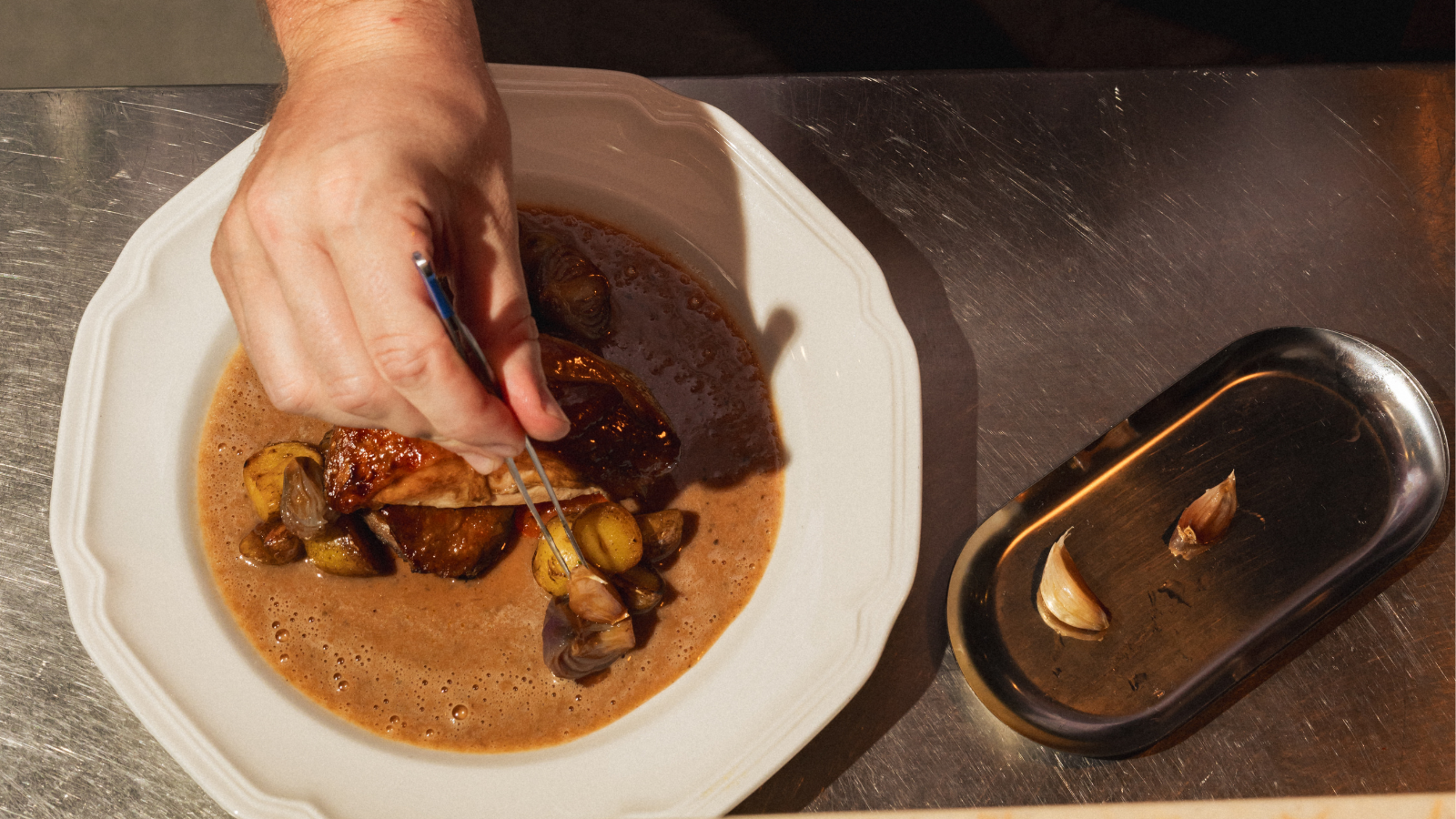
What Conscious Cooking Looks Like in a Mediterranean Restaurant
Mediterranean cuisine is a useful framework for this conversation because, at its best, it already values clarity. It tends to reward ingredient character, balanced seasoning, and cooking that lets the product speak. That makes it easier for a restaurant to express care without overcomplicating the plate.
Starting With Ingredient Quality
A more responsible kitchen starts with discernment. Better ingredient quality usually means the food needs less disguise, fewer unnecessary additions, and less visual excess. In a seafood-driven restaurant, that discipline is especially important. Freshness, texture, and timing are not optional details. They are the basis of the experience, and they also encourage a more respectful style of cooking.
Respecting Seasonality and Menu Logic
Seasonality in Bali may not always look identical to a European calendar, but the principle still matters. Menus that pay attention to availability, weather, appetite, and ingredient logic tend to feel more alive. They are also less likely to become bloated or disconnected from their setting. When a menu is edited with care, guests feel it. The restaurant seems more confident, and the food reads as more considered.
Working With Seafood and Fire More Thoughtfully
At Giselle Bali, seafood and fire are central to the identity of the table. That creates both opportunity and responsibility. These are expressive elements, but they can also encourage excess if they are handled without restraint. A more conscious kitchen treats them differently, allowing flavour, texture, and product quality to do more of the work.
Letting the Product Lead
Thoughtful cooking often begins by resisting the urge to overbuild. When the ingredient is good, the role of the kitchen is not to bury it under too many signals. It is to sharpen it. That might mean cleaner seasoning, better timing, or a plating style that keeps the plate generous without becoming wasteful or theatrical for its own sake.
Reducing Excess Through Better Design
Waste reduction is not only a back-of-house issue. Menu design, portion logic, and preparation style all influence how much excess a restaurant creates. Shared plates can help when they are built intelligently, because they let the table order more flexibly and encourage a more natural flow of consumption. Good design is often one of the quietest forms of responsibility.

Why Credibility Matters More Than Green Claims
There is a difference between sounding responsible and actually behaving responsibly. The first relies on language. The second is visible in coherence. Does the restaurant’s philosophy match the food? Does the menu feel edited instead of inflated? Does the atmosphere suggest care rather than spectacle alone? Those are the kinds of signals people trust.
For Giselle Bali, the strongest sustainable message is likely not an explicit one. It is the impression of a restaurant that cooks with intention, understands its products, and avoids treating responsibility as a marketing accessory.
How a More Conscious Kitchen Shapes the Guest Experience
Guests do not need a lecture on sustainable cooking to recognise when a restaurant feels more thoughtful. They recognise it in the freshness of the plate, in the balance of the menu, in the absence of heaviness, and in the sense that each dish has a reason to exist. Conscious dining, from the guest side, often feels like clarity.
That clarity also fits Giselle’s broader identity. The restaurant is designed for long evenings, shared dishes, and a kind of Riviera-inspired ease that depends on confidence rather than overstatement. A more measured kitchen supports exactly that mood.
A Natural Direction for Dining in Canggu
As Bali’s dining scene matures, the restaurants that will stand out are not only the ones with strong aesthetics or busy rooms. They are the ones that show judgment. They understand how ingredient quality, seasonality, menu design, and atmosphere work together. They know that responsibility is built through repeated choices, not single statements.
Seen that way, a more conscious approach is not a side note for Giselle Bali. It is a natural extension of the restaurant’s Mediterranean philosophy, one that values product, generosity, and refinement in equal measure. For guests seeking a more thoughtful restaurant in Canggu, that kind of quiet seriousness is increasingly the thing that matters most.
