Where to Stay in Canggu: The Best Boutique Villas and Hotels Near Bali’s Top Restaurants
Choosing where to stay in Canggu is one of the decisions that shapes almost every other part of the trip. The right base influences the beach you walk to, the streets you spend time on, the rhythm of your mornings, and the ease with which your evenings turn into something memorable.
Canggu is not a single mood. It is a set of adjacent neighbourhoods with distinct personalities, and the difference between staying in one area or another is more significant than many travel guides suggest. For visitors who care about dining, atmosphere, and walkability, location is not a secondary detail. It is the framework of the stay.
Why Where You Stay in Canggu Shapes Your Entire Trip
In many destinations, accommodation is simply where you return after the day is done. In Canggu, it functions more like a launch point. The streets, cafés, beaches, boutiques, and restaurants are all part of one continuous daily experience, which means that the quality of your address shapes the quality of your time.
Staying close to the places that matter most to you changes everything. It reduces friction, increases spontaneity, and lets the neighbourhood reveal itself at walking pace rather than through a series of transfers.
Understanding Canggu’s Sub-Neighbourhoods
The main Canggu corridor can be read through a few distinct zones. Batu Bolong remains the most social and recognisable, Berawa feels more polished and design-led, and Pererenan offers a quieter atmosphere with more space to breathe. None is objectively better than the others. The right choice depends on what kind of stay you want to build.
Batu Bolong: The Social Heart
Batu Bolong is the area that most clearly embodies the fast-moving side of Canggu. The streets are animated, the beach is active from early morning onward, and the wider area gives easy access to cafés, shopping, and dinner destinations. For travellers who want to be in the middle of things, it remains an obvious option.
Berawa: Polished and Design-Forward
Berawa offers a slightly more refined interpretation of the same lifestyle. Accommodation here often feels more residential, more curated, and a little less chaotic, while still keeping guests close to the places they came to experience.
Pererenan: Quieter, Greener, Emerging
Pererenan appeals to guests who want a calmer pace without disconnecting from the Canggu ecosystem altogether. The area still allows access to the neighbourhood’s main dining and lifestyle circuit, but it does so from a more relaxed base.
Boutique Hotels: The Canggu Sweet Spot
For many visitors, a boutique hotel is the ideal compromise between comfort, service, and local character. The best properties in Canggu are not necessarily the largest. They are the ones that combine thoughtful design, good locations, and a sense of atmosphere that makes the stay feel specific to Bali rather than interchangeable.
Tugu Hotel remains one of the clearest examples of this approach, pairing strong identity with a deep sense of place. Desa Seni offers something different, leaning more heavily into wellness, greenery, and a slower rhythm that still feels connected to the wider neighbourhood.
Private Villas in Uluwatu: Two Addresses Worth the Journey
Uluwatu sits about an hour south of Canggu. For visitors who want to cover both parts of the island in a single trip, two villas there make that combination worth planning around.
Casa Mare Blu Bali
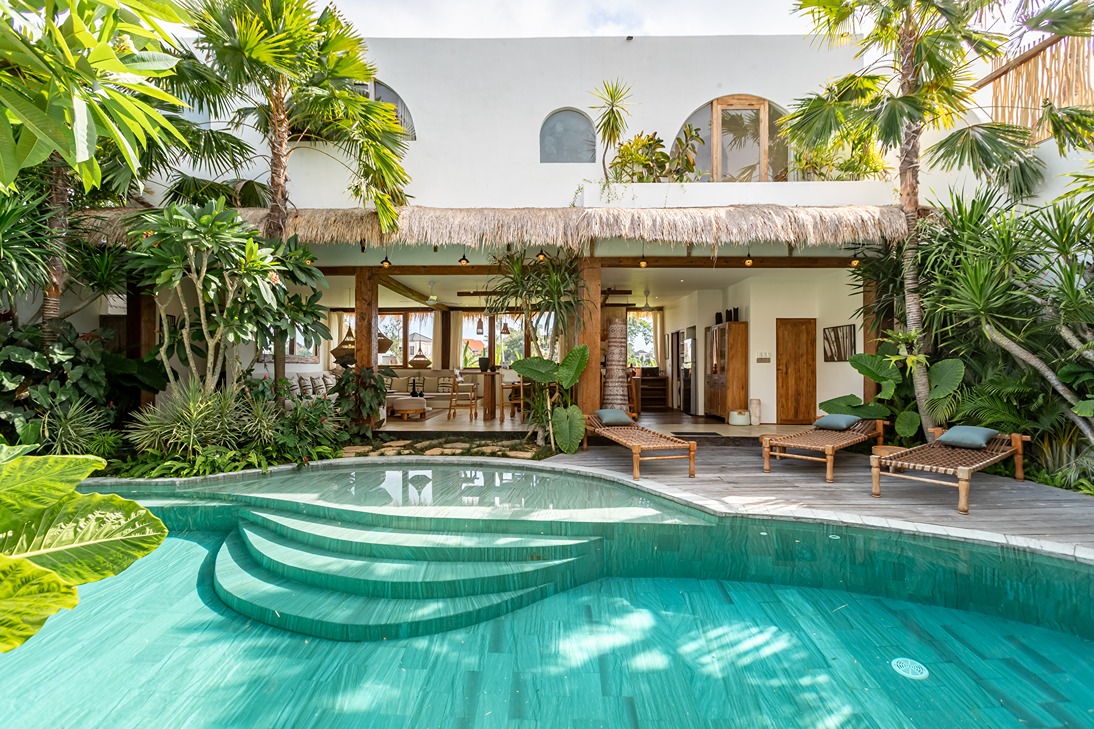
Casa Mare Blu Bali is on the southern cliffs of Uluwatu, built around the ocean view. Whitewashed walls, open light, and materials that reference the Mediterranean coast without overexplaining it. The name says what it is.
Good for a couple or a small group. Quiet, private, and oriented entirely toward the water.
Casa Prana Bali
Casa Prana Bali is a different proposition. Less about the horizon, more about space and greenery. Uluwatu at its slowest. The kind of place where a few days pass without feeling wasted.
Both are about an hour from Canggu. Close enough to drive up for dinner at Giselle and still make it back. For anyone building a longer stay across the island, Uluwatu first and Canggu second is a combination that tends to work well.
What to Look for When Booking Accommodation in Canggu
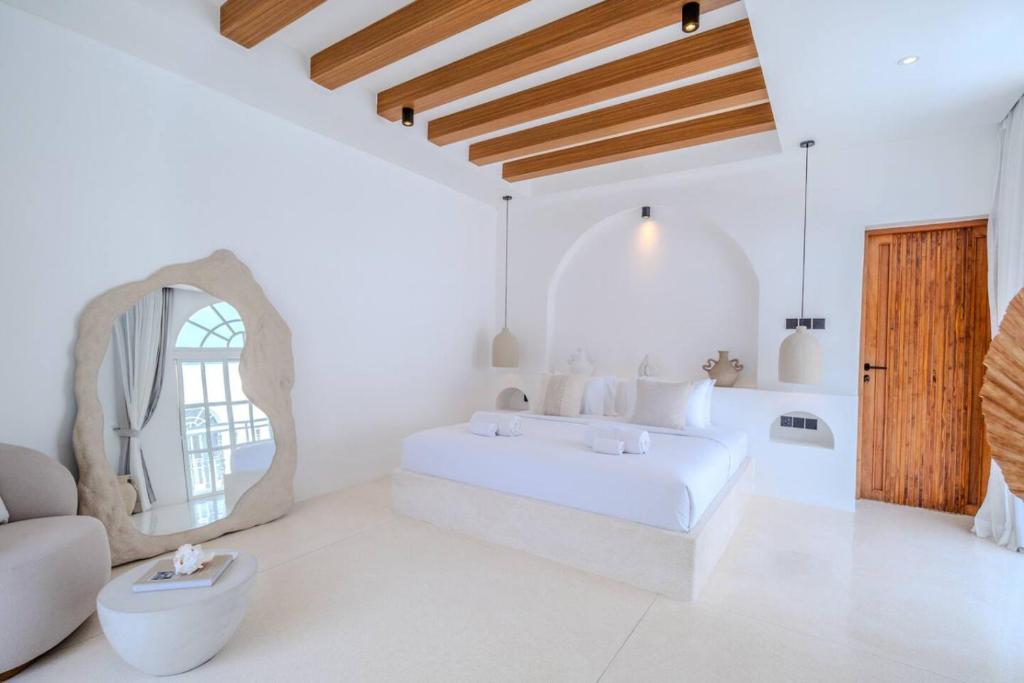
Beyond price and style, several practical elements matter in Canggu. Distance to your preferred dining zone is more important than it first appears. Sound levels vary dramatically between streets. Pool access often feels less like a luxury and more like an essential part of the Bali experience.
Travellers should also think about how they want the day to flow. A quieter villa may suit longer stays, while a centrally positioned boutique hotel may be more valuable for shorter trips built around restaurants and movement.
The Dining-Accommodation Connection: Why Proximity Matters
In Canggu, where you stay and where you eat are closely linked. The best evenings are usually the most effortless ones: a return from the beach, a shower, a short walk, and then dinner without transport logistics interrupting the mood.
That is why staying near the neighbourhood’s dining heart can transform the trip. It turns dinner from an event that must be organised into something that can happen naturally.
Staying Near Jalan Tanah Barak: The Centre of Canggu’s Evening Scene
Jalan Tanah Barak has become one of the clearest anchors of Canggu’s evening identity. Staying nearby allows guests to move easily between daytime coffee, villa downtime, and dinner without overcomplicating the schedule. Revolver is one of the addresses that helps define the street by day, while the surrounding area becomes increasingly compelling as evening approaches.
For guests planning to dine at Giselle Bali, proximity to Tanah Barak is particularly valuable. It keeps the day coherent. You can spend the afternoon at your hotel or villa, move into the evening without friction, and end up at a proper Mediterranean table exactly when the neighbourhood is at its best.
