Wine Culture in Bali: How to Build the Perfect Mediterranean Evening in Canggu
Bali has never been short on exceptional food. But in recent years, something quieter and equally significant has been taking shape across the island’s most sophisticated dining rooms: a genuine wine culture. And nowhere is this shift more visible, or more enjoyable, than in Canggu, where a new generation of restaurants is treating wine not as an afterthought, but as an essential part of the dining experience.
For visitors and residents who appreciate the ritual of a well-chosen bottle, Bali’s wine scene has matured considerably. The days of limited selections and prohibitive markups are giving way to curated lists, knowledgeable service, and pairings that genuinely elevate what is on the plate. If you know where to look, a wine-driven evening in Canggu can rival anything you would find along the Mediterranean itself.
The Rise of Wine Culture in Bali
Indonesia is not a traditional wine-producing country, and for a long time that shaped how wine was perceived and served across the archipelago. Import regulations, tropical logistics, and a market historically oriented toward cocktails and beer meant that serious wine programmes were rare outside of Jakarta’s top hotels.
That has changed. Bali’s international population, a mix of European expats, Australian residents, well-travelled digital nomads, and an increasingly sophisticated local hospitality industry, has created real demand for quality wine. Importers have responded, expanding their portfolios to include producers from France, Italy, Spain, Australia, and the New World. The result is that Bali’s best restaurants, particularly in Canggu, now offer wine lists that are both thoughtfully assembled and genuinely diverse.
What is driving this is not snobbery. It is a simple recognition that great food deserves great wine, and that the two together create something more memorable than either alone.
Why Mediterranean Dining and Wine Belong Together
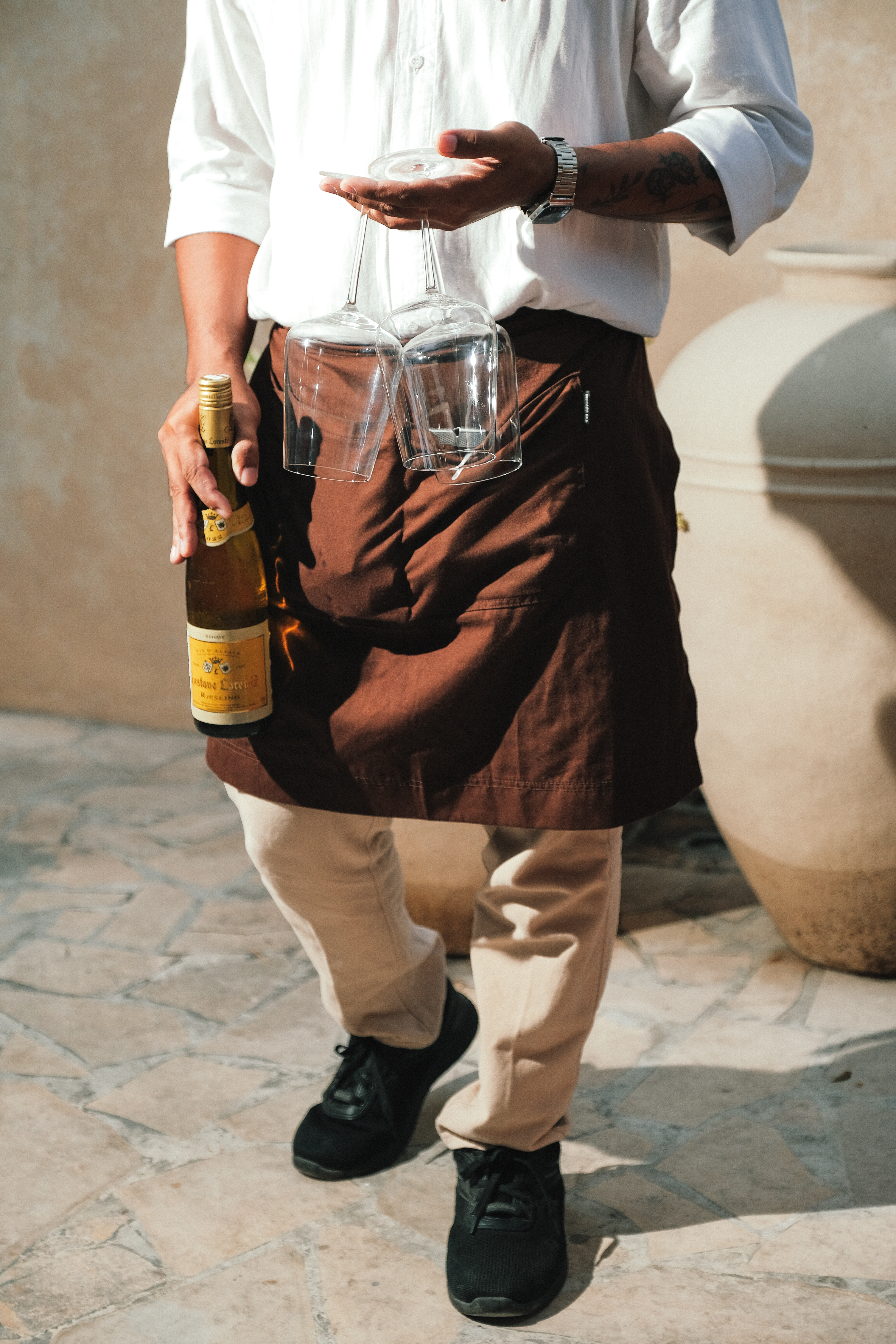
In Mediterranean culture, wine is not separate from the meal. It is woven into the fabric of the dining experience, chosen to complement the food, to mark the transition between courses, and to extend the evening into something unhurried and convivial.
This philosophy is particularly relevant in Canggu, where the best Mediterranean restaurants have built their identities around exactly this kind of extended, sharing-focused dining. When a table is covered with seafood crudo, homemade pasta, and fire-grilled fish, each dish benefits from a different wine conversation. A crisp Chablis alongside raw scallops. A Vermentino with lemon butter linguine. A structured Côtes du Rhône with slow-cooked lamb. The interplay between food and wine is where Mediterranean dining finds its deepest expression.
At Giselle Bali, this interplay is central to the experience. The wine programme is designed not as a standalone list, but as a companion to the kitchen, with each section of the menu finding natural partners across the cellar.
Navigating a Wine List in Bali: What to Know
For guests unfamiliar with wine in an Indonesian context, a few guiding principles can transform an evening.
Old World Whites for Seafood and Crudo
Mediterranean seafood, from crudo and tartare to oysters and grilled whole fish, calls for wines with minerality, acidity, and restraint. French whites from Burgundy, the Loire Valley, or Provence are natural partners. Italian Vermentino and Greco di Tufo also perform beautifully alongside citrus-dressed raw fish. In Bali, the best wine programmes stock these specifically because they work with the cuisine.
When ordering from a raw bar or sharing a seafood platter, look for wines described as crisp, mineral, or saline. These are the bottles that will make the ocean flavours on your plate sing.
Structured Reds for Fire-Grilled Mains
When the evening progresses to grilled octopus, lamb shoulder, or wood-fired chicken, the wine conversation shifts. Structured Mediterranean reds such as Southern Rhône blends, Languedoc, or Spanish Garnacha have the weight and character to stand alongside smoky, fire-touched preparations. A well-chosen red with Giselle’s Mediterranean spiced lamb, for example, is the kind of pairing that defines an evening.
The Aperitif Moment: Why It Matters
In the Mediterranean, the aperitif is sacred. It is a deliberate pause before dinner that signals the transition from the day’s pace to the evening’s rhythm. A glass of dry rosé, a crisp sparkling wine, or a light botanical cocktail sets the tone for everything that follows.
Canggu’s tropical climate makes this ritual even more natural. Arriving early, choosing a first glass, and watching the evening begin is one of the simplest and most rewarding pleasures available in Bali’s dining scene.
Wine and Sharing Plates: The Art of Pairing for the Table
Sharing-format dining introduces a wonderful complication for wine pairing: the table is covered with dishes of vastly different profiles simultaneously. Rich croquettes sit alongside delicate crudo. Truffle pasta shares space with grilled vegetables and fresh salads.
The best approach is to embrace the diversity rather than fight it. Order two or three bottles across different styles, a white, a rosé, and a red, and let guests match intuitively as they eat. This is how wine works in the Mediterranean: not as a rigid pairing exercise, but as a flowing, social element of the meal.
Restaurants that understand this will present their wine list in a way that supports exploration rather than prescription. The goal is not to find the single perfect bottle, but to create a small collection on the table that covers the range of what the kitchen is sending out.
What Makes a Great Wine Programme in Canggu
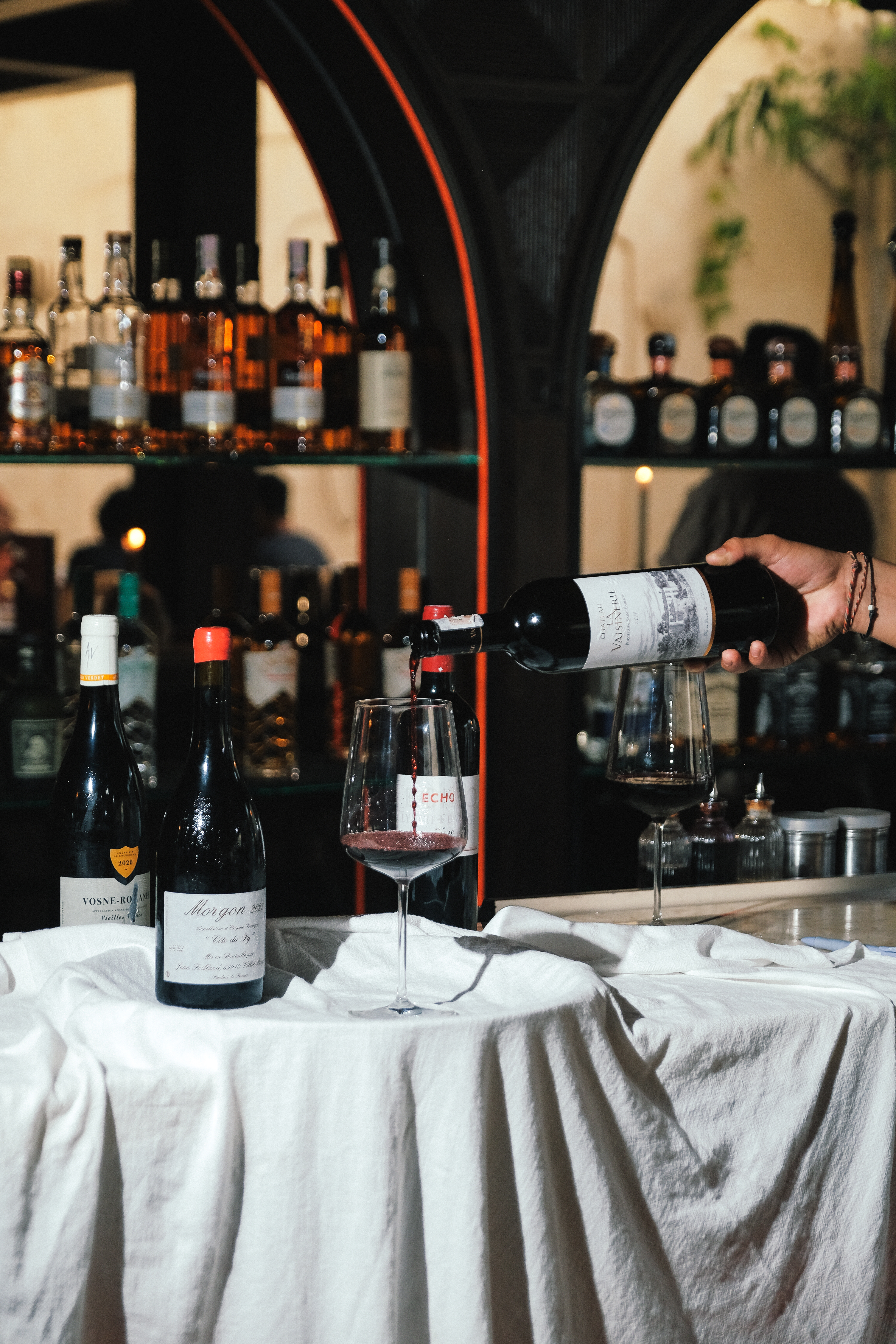
Not every restaurant in Canggu with a wine list has a wine programme. The distinction matters. A great wine programme is curated by someone who understands both the cellar and the kitchen, who selects wines that complement the menu’s specific flavours, and who trains staff to guide guests with confidence and without pretension.
In practice, this means a list that balances familiar labels with discovery, that offers wines by the glass for flexibility, and that includes options across price points without sacrificing quality at the entry level. It also means service that is knowledgeable but never intimidating, with a team that can recommend a bottle based on what you have ordered, not just what is most expensive.
Giselle Bali’s approach to wine reflects exactly this philosophy: a carefully edited list spanning mineral whites, Mediterranean rosés, and structured reds, supported by a team that understands how each bottle relates to the food.
Building Your Perfect Mediterranean Wine Evening in Canggu
The best wine evenings are not complicated. They follow a natural arc:
Begin with an aperitif, something light, refreshing, and unhurried. Move to a crisp white alongside the first courses: crudo, tartare, a seafood platter for the table. As the mains arrive, whether grilled fish, pasta, or fire-touched meats, shift to a red with weight and warmth. Close the evening gently, perhaps with a dessert wine or a final cocktail, letting the conversation carry the night forward.
In Canggu, this arc is available to anyone willing to slow down and engage with it. The ingredients are all here: exceptional Mediterranean cuisine, an increasingly sophisticated wine scene, and the kind of warm, unhurried atmosphere that makes a long dinner feel like the most natural thing in the world.
